
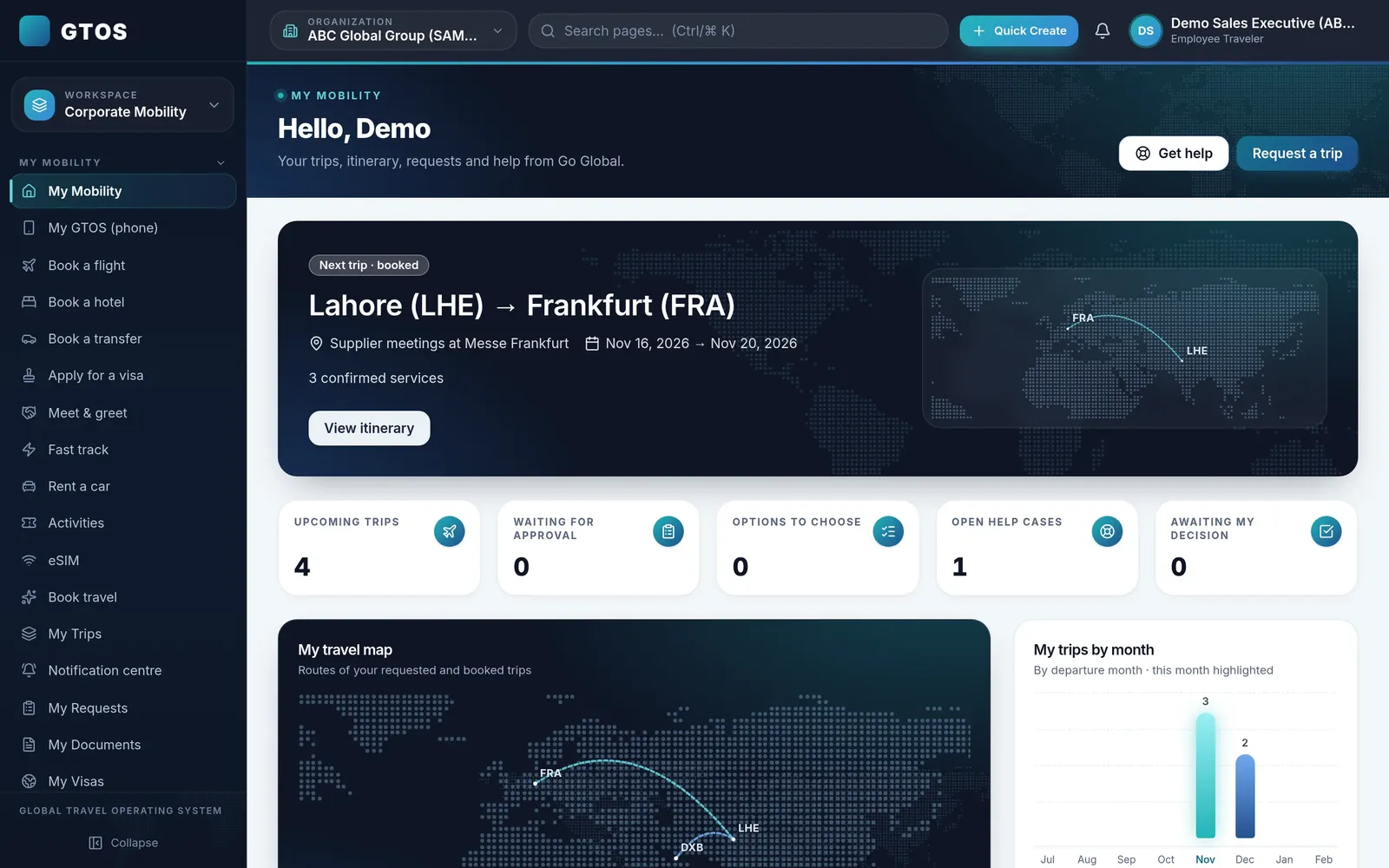
How to run a managed travel programme
A managed travel programme connects company policy, booking technology, preferred suppliers, traveller safety and financial reporting into one repeatable operating rhythm — removing friction for frequent travellers while giving leadership predictable budget control.
Five components of a high-performing travel programme
1. Clear written policy
Specific, fair thresholds for flights, hotels, lead times, per diems and exceptions.
2. Policy-aware booking
Embed rules directly inside GTOS so compliant choices appear naturally at search.
3. Supplier focus
Concentrate volume on key city hotels and core airline corridors to unlock value.
4. Active duty of care
Track live itineraries, assess destination risks and deliver 24/7 traveller assistance.
5. Quarterly KPI review
Review compliance, leakage, unused credits and lead times to tune rules based on evidence.
Balancing finance, HR and traveller priorities
| Stakeholder | Primary need and how the programme delivers it |
|---|---|
| Finance & Procurement | Budget predictability, cost-centre accuracy, cost control, VAT/tax invoices and unused-ticket recovery. |
| HR & Security | Consistent duty of care, ISO 31030 risk readiness, fair grade equity and traveller wellbeing. |
| Frequent Travellers | Fast booking, minimal email chasing, mobile itinerary access and instant help when flights cancel. |
| Department Approvers | One-click mobile/desktop approvals showing policy status and budget context immediately. |

Measure exceptions, not just totals
A static travel policy written once and filed away quickly loses relevance as hotel rates shift across cities. High-performing travel managers review exception reasons every quarter: if 60% of London bookings exceed the room cap, the cap needs updating rather than scolding travellers.
Go Global pairs GTOS reporting with structured quarterly business reviews so finance and HR refine supplier coverage, advance-purchase targets and destination guidelines continuously.
- Track advance-booking windows, out-of-policy reason codes and off-channel leakage
- Adjust city-tier hotel caps twice yearly against real market rate movements
- Reclaim unused ticket credits automatically before booking new fares
First 90 days of launching a managed travel programme
Transitioning from ad-hoc bookings to a managed programme succeeds when leadership communicates the traveller benefits clearly: faster approvals, zero personal credit-card out-of-pocket strain, and 24/7 WhatsApp or phone rescue whenever flights cancel.
- Days 1–30: Baseline historical spend, align simple policy rules and configure GTOS approvals
- Days 31–60: Import traveller profiles, brief executive assistants and launch with pilot teams
- Days 61–90: Review first monthly consolidated invoice, unused credits and exception patterns
Managed travel programme questions
Who owns a managed travel programme inside a company?
Typically finance or procurement leads commercial and budget targets alongside HR for policy and duty of care, supported day-to-day by Go Global.
How do we encourage travellers to book inside the managed programme?
Keep booking fast, honour competitive rates, automate approvals in GTOS and connect programme booking to straightforward expense settlement.
What metrics should we track each quarter?
Online adoption, policy compliance rate, advance-booking lead time, unused-credit recovery, hotel attachment and cost per trip by route.
Can GTOS run alongside our existing finance system?
Yes. Exportable trip, approval and invoice data aligns cleanly with your cost centres and general-ledger codes.
Building or refreshing your managed travel programme?
Share your itinerary, policy requirements or group size. Our team replies with routes, visa guidance and a structured quote backed by 100,000+ trips managed and 24/7 traveller support. Email insights@goglobal.pk or WhatsApp 0320-4111222.