
Show policy in search
Mark in-policy vs out-of-policy fares clearly at selection time instead of rejecting trips days later.
Programme
Corporate travel managementPolicy & duty of careVisa servicesUmrah & Hajj for companiesIndustriesWhy Go GlobalNetwork
All destinationsTrade fairsPakistan citiesEvents
Meetings & eventsGroup UmrahTechnology
All solutionsGTOSRezenciaAvunzoFolio6Resources
Resource libraryFAQTraveller supportContact & enquiries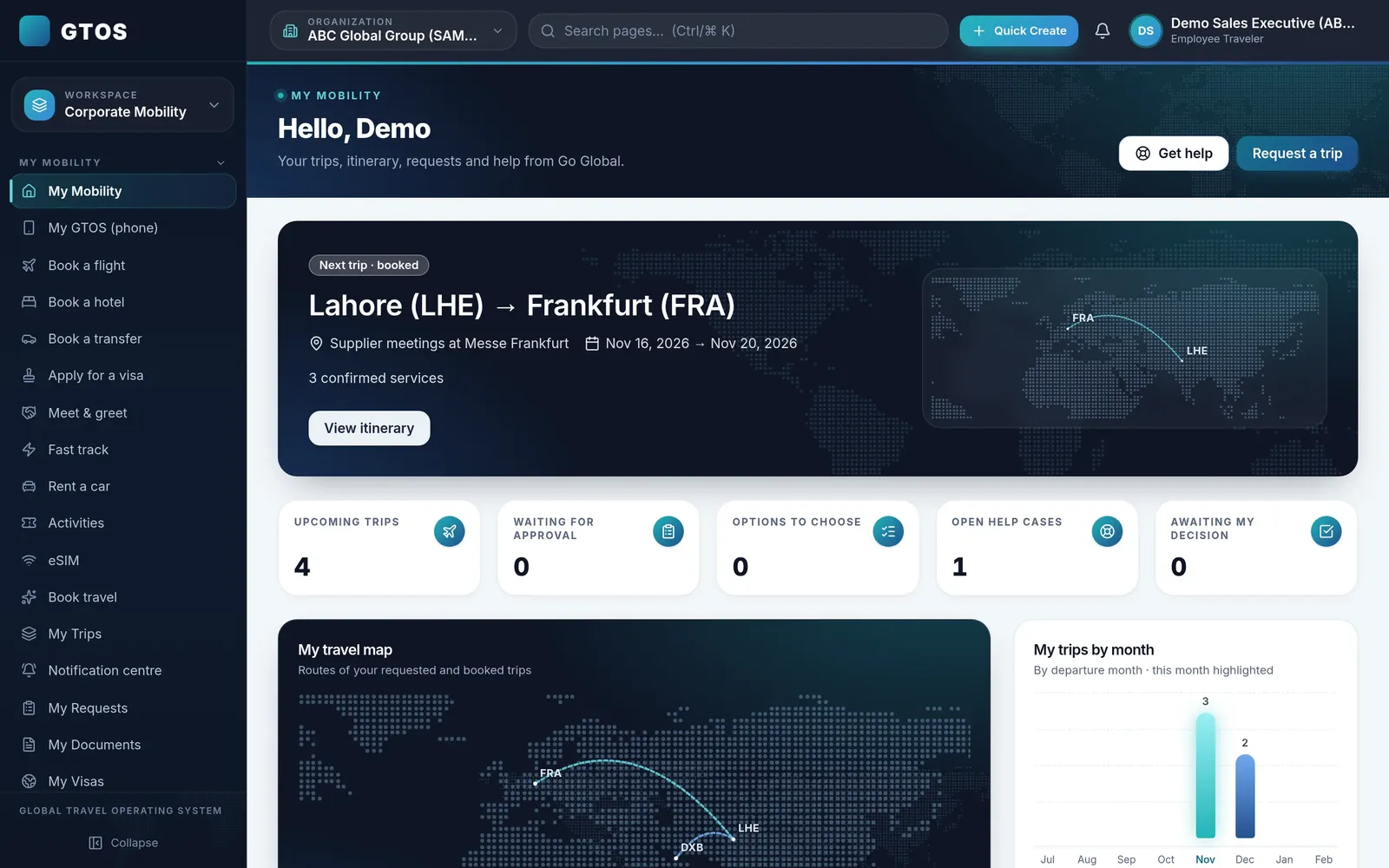
Strict travel policies fail when they feel punitive or bureaucratic. High-compliance programmes make the right booking the easiest booking — embedding clear rules at search time, automating routine approvals and reserving manager review strictly for genuine exceptions.
Mark in-policy vs out-of-policy fares clearly at selection time instead of rejecting trips days later.
Auto-approve standard domestic or in-cap trips within budget, escalating only out-of-policy choices.
Let travellers explain valid exceptions ("only direct flight matching meeting") in one click.
| Rule type | Best use in a modern corporate policy |
|---|---|
| Hard block | Reserve for non-negotiable governance: unapproved First Class, blacklisted suppliers, or restricted high-risk destinations without security sign-off. |
| Soft approval escalation | Use for fares slightly above logical lowest fare, shorter lead times on urgent client trips, or peak-week city hotel overrides. |
| Nudge / guidance | Use for encouraging earlier booking windows, rail over short-haul air, or preferred hotel chains. |
Employees rarely read a 30-page HR travel handbook before booking a Tuesday morning flight. When cabin thresholds, city hotel limits and approval rules sit directly inside GTOS, every user sees immediately what qualifies and why.
Reviewing exception reason codes quarterly reveals whether staff are bending rules needlessly or whether a specific city cap simply needs adjustment.
A forty-page PDF policy buried on an intranet guarantees non-compliance because nobody reads it before flying. High-compliance programmes translate rules into concise one-page summaries supported directly by visual policy flags inside GTOS.
For routine low-value in-policy trips, pre-approved travel budgets or instant manager sign-off prevents bottlenecks; reserve deep scrutiny for international or out-of-policy requests.
Selecting an economy fare within an agreed price/schedule tolerance (for example within two hours of preferred departure without excessive multi-stop layovers).
Allow urgent bookings to proceed via a fast out-of-policy reason code ("urgent client meeting") routed straight to the budget owner.
Yes. GTOS supports multi-tier policies across grades, departments and group entities.
Share your itinerary, policy requirements or group size. Our team replies with routes, visa guidance and a structured quote backed by 100,000+ trips managed and 24/7 traveller support. Email insights@goglobal.pk or WhatsApp 0320-4111222.