
How to control corporate travel costs
Real corporate travel cost control rarely comes from slashing travel arbitrarily or forcing staff into inconvenient red-eye flights. Sustainable savings come from fixing the structural leaks that inflate spend quietly: late bookings, uncaptured unused tickets, off-channel hotels and unreviewed exceptions.
Where real corporate travel savings come from
| Cost lever | Operational action inside the programme |
|---|---|
| Booking lead times | Encourage 14–21 day advance booking on predictable international routes and 7+ days on regional legs before lower fare buckets close. |
| Unused ticket recovery | Track every cancelled non-refundable airline ticket centrally and prompt re-application before buying fresh fares. |
| City-tier hotel caps | Set realistic dynamic or tiered city hotel limits rather than one stale global cap that triggers constant exceptions. |
| Rail on short corridors | Use high-speed rail (London–Manchester, Frankfurt–Cologne, Tokyo–Osaka, NYC–DC) instead of costly short-haul flights + airport transfers. |
| Eliminating leakage | Bring off-channel bookings back into GTOS so volume concentrates with preferred suppliers and GST/VAT invoices are captured. |
| Pre-trip approvals | Route out-of-policy fare or cabin exceptions to budget holders BEFORE ticketing, when cheaper options still exist. |
Stop overspend before the ticket is issued
Post-trip expense audits only tell finance how much money has already been spent. By contrast, catching an out-of-policy flight or an oversized hotel suite at the request and approval stage lets managers steer travellers toward compliant options while inventory is still open.
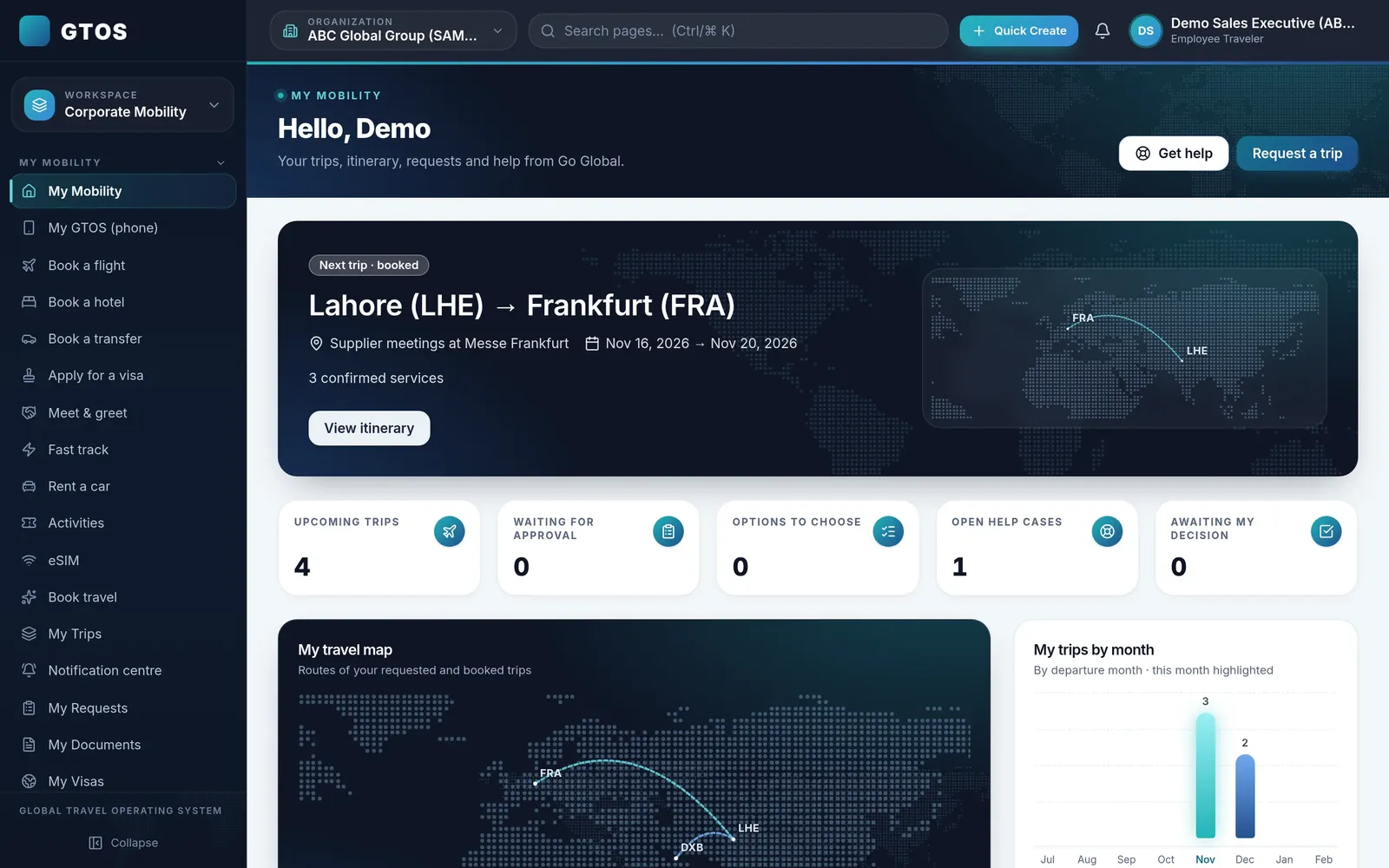
GTOS highlights policy status right during trip selection, asks for structured reason codes whenever an exception is requested, and tracks savings across departments without turning managers into full-time travel agents.
- Capture reason codes whenever travellers book outside lowest logical fare rules
- Separate predictable internal meetings from urgent client-facing travel in KPIs
- Reconcile unused air credits monthly instead of writing them off
Why harsh caps backfire — and what works instead
Setting hotel caps far below market reality in cities like London, New York or Singapore forces every traveller to request manual overrides, eroding respect for the entire travel policy. Dynamic benchmarking and fair city tiers maintain credibility while squeezing out genuine waste.
Travel cost control questions
What is the single quickest cost leak to fix in corporate travel?
Recovering unused airline ticket credits and shifting predictable international flights out of the last-seven-day booking window.
Does tightening travel policy slow down urgent client travel?
Not when built properly: emergency or client-billable trips pass smoothly with an approval reason code, while routine trips follow advance-purchase targets.
How does hotel attachment lower total trip cost?
Booking hotels inside the programme captures corporate rates, includes clear breakfast/cancellation terms and prevents last-minute walk-up rack rates.
Can GTOS show savings by department and cost centre?
Yes. Finance views track spend, policy compliance and exception patterns by team and route.
Looking to reduce travel spend without hurting productivity?
Share your itinerary, policy requirements or group size. Our team replies with routes, visa guidance and a structured quote backed by 100,000+ trips managed and 24/7 traveller support. Email insights@goglobal.pk or WhatsApp 0320-4111222.